
A living book from Ireland
The guest “book” was teacher Medea Hinteregger, who moved with her family from Brixen to Ireland at the age of ten and lived there for three years. Drawing on her own experience, she guided the students through different aspects of Irish life, giving them a vivid and personal insight into everyday living in Ireland.
School, language and names
Medea first focused on the Irish school system, explaining the role of school uniforms and daily routines. She then introduced the students to the Irish language, going beyond the well-known “sláinte” to present everyday phrases, typical Irish first names and the coexistence of English and Irish on place-name signs, which reminded the audience of South Tyrol’s bilingual topography.
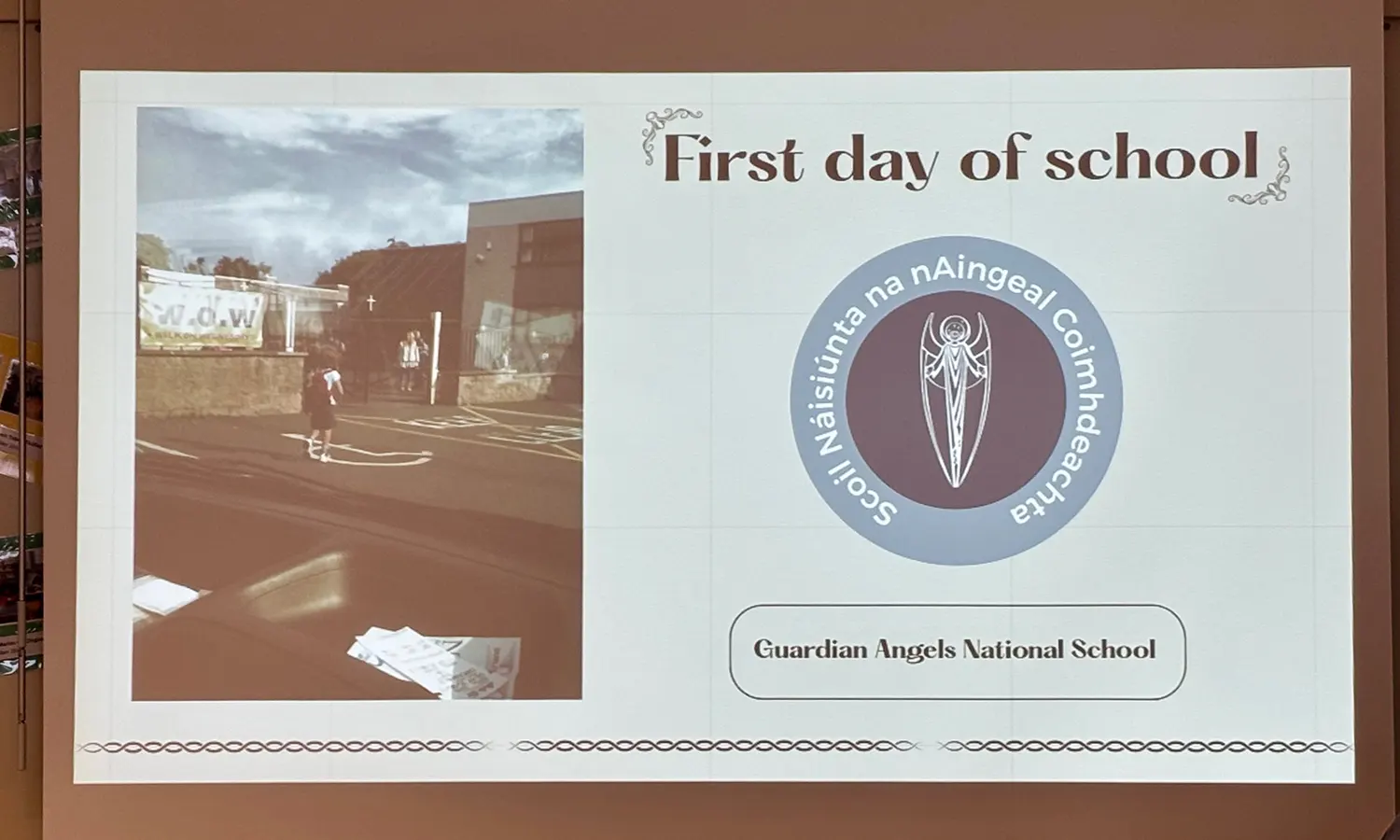
Foto: WFO Bruneck
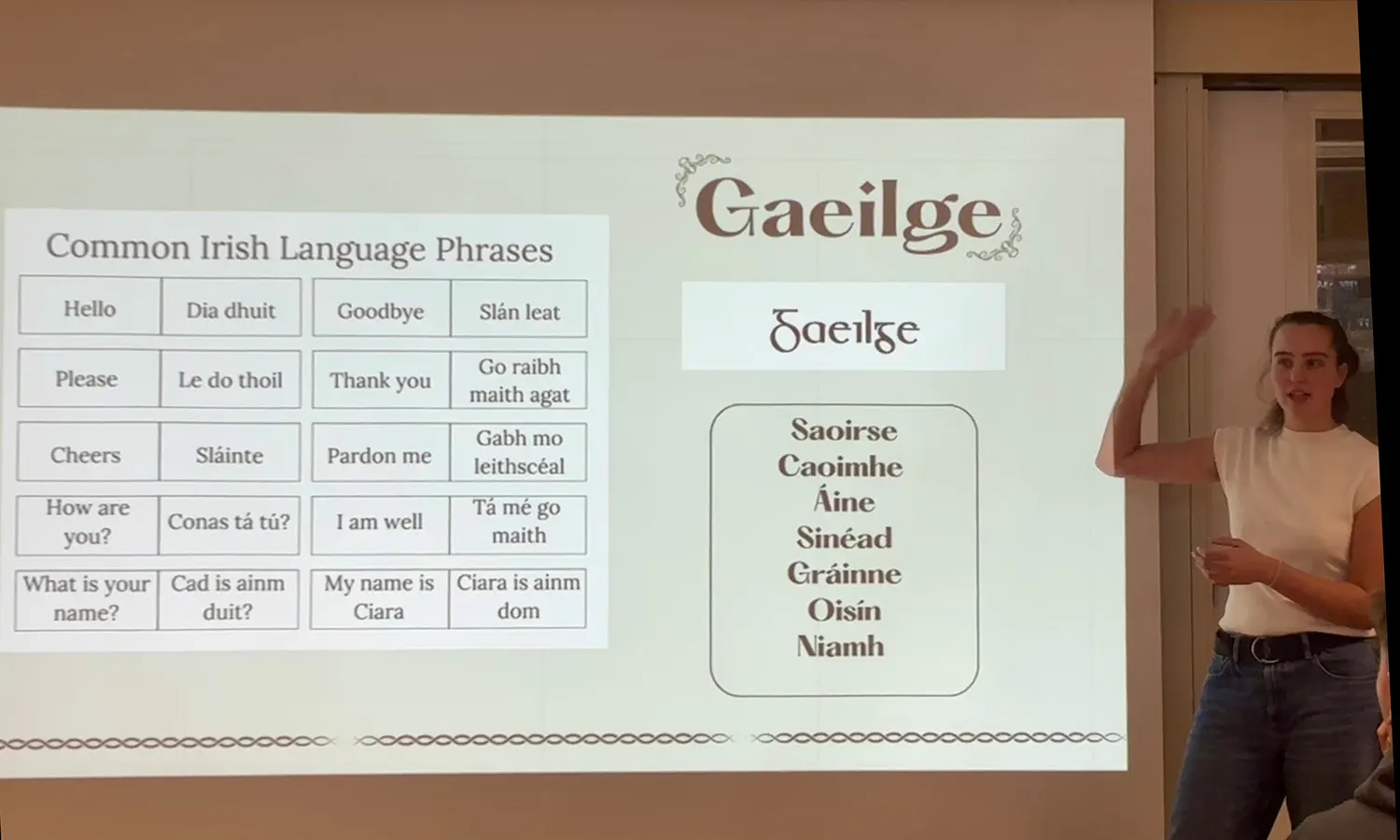
Foto: WFO Bruneck
Sports, food and traditions
Another part of the talk dealt with Irish sports such as Gaelic football, hurling and even fencing, which many students found surprising. Medea also spoke about Irish food culture and traditions, describing the initial “culture shock” when comparing it with the high standards of Italian cuisine, before highlighting dishes and customs that she came to appreciate.
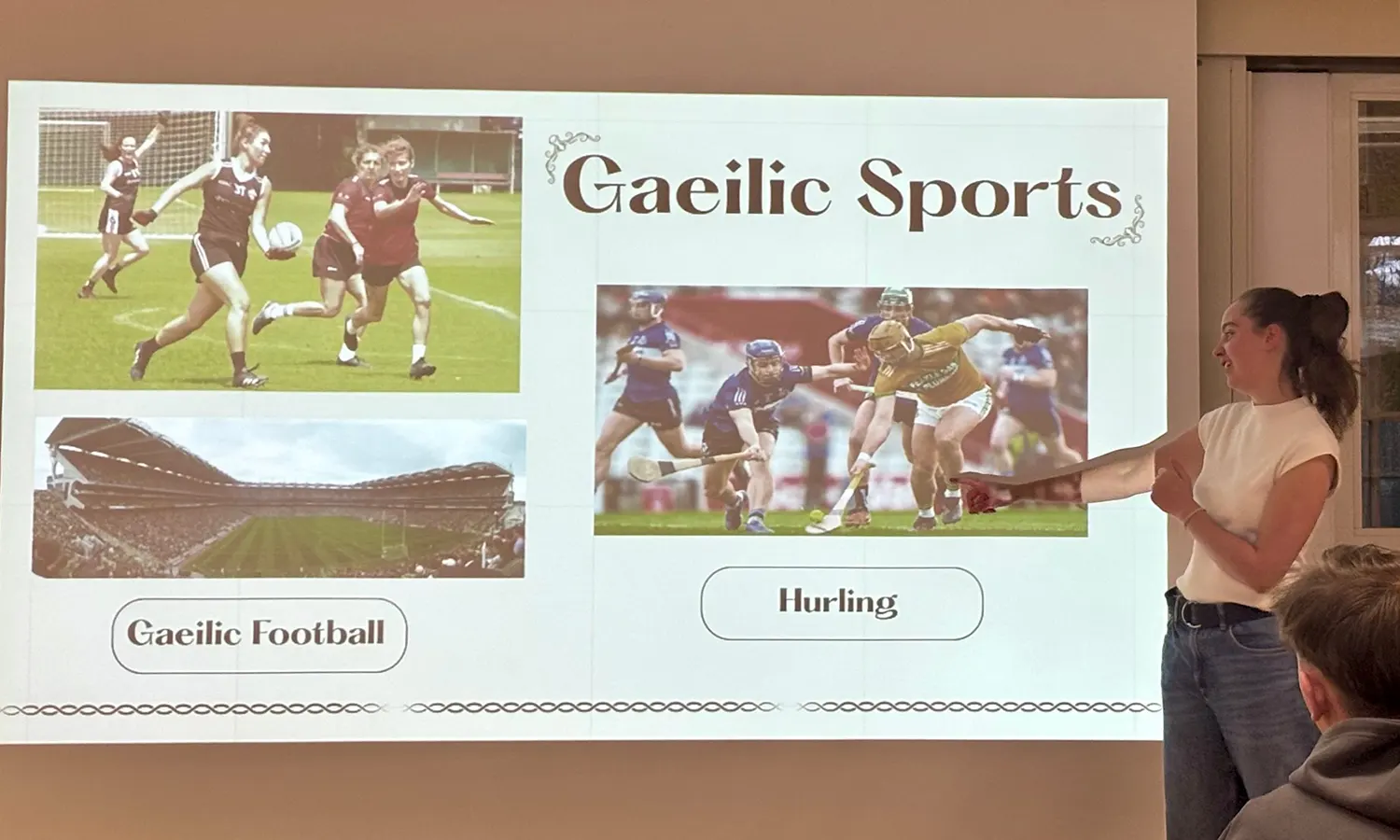
Foto: WFO Bruneck
History, politics and sights
The presentation did not shy away from more complex topics, touching on the historical and current issues surrounding Northern Ireland. Medea also took the students on a visual journey to famous sights, including Dublin, the Cliffs of Moher and the prehistoric site of Newgrange, giving geographical and cultural context to these landmarks.
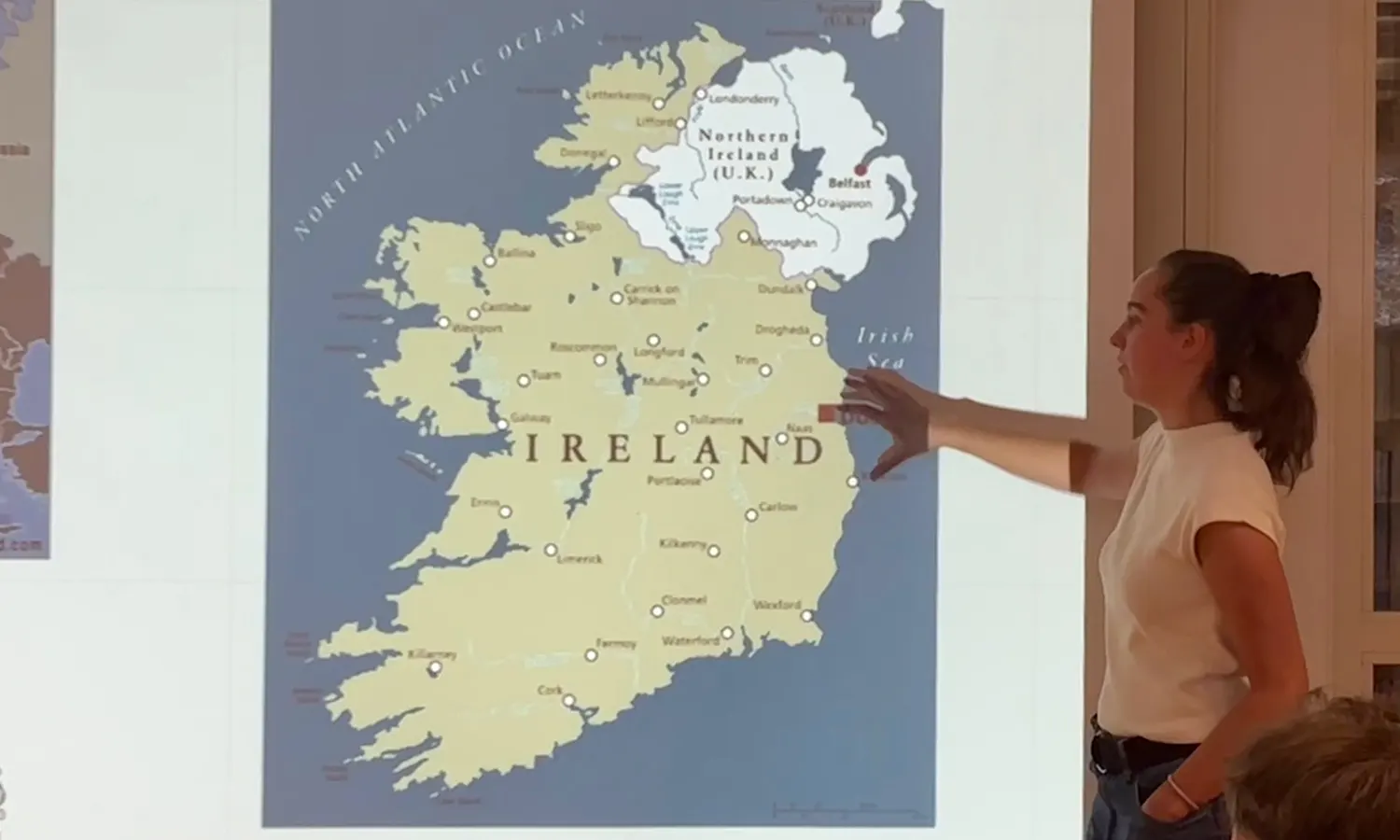
Foto: WFO Bruneck
Active participation and conclusion
The students followed the presentation with interest and listened closely to Medea’s stories. The overall takeaway of the morning session was that first-hand experiences like hers make cultural, historical and linguistic differences tangible and help young people see Europe’s diversity as an enrichment rather than a barrier.
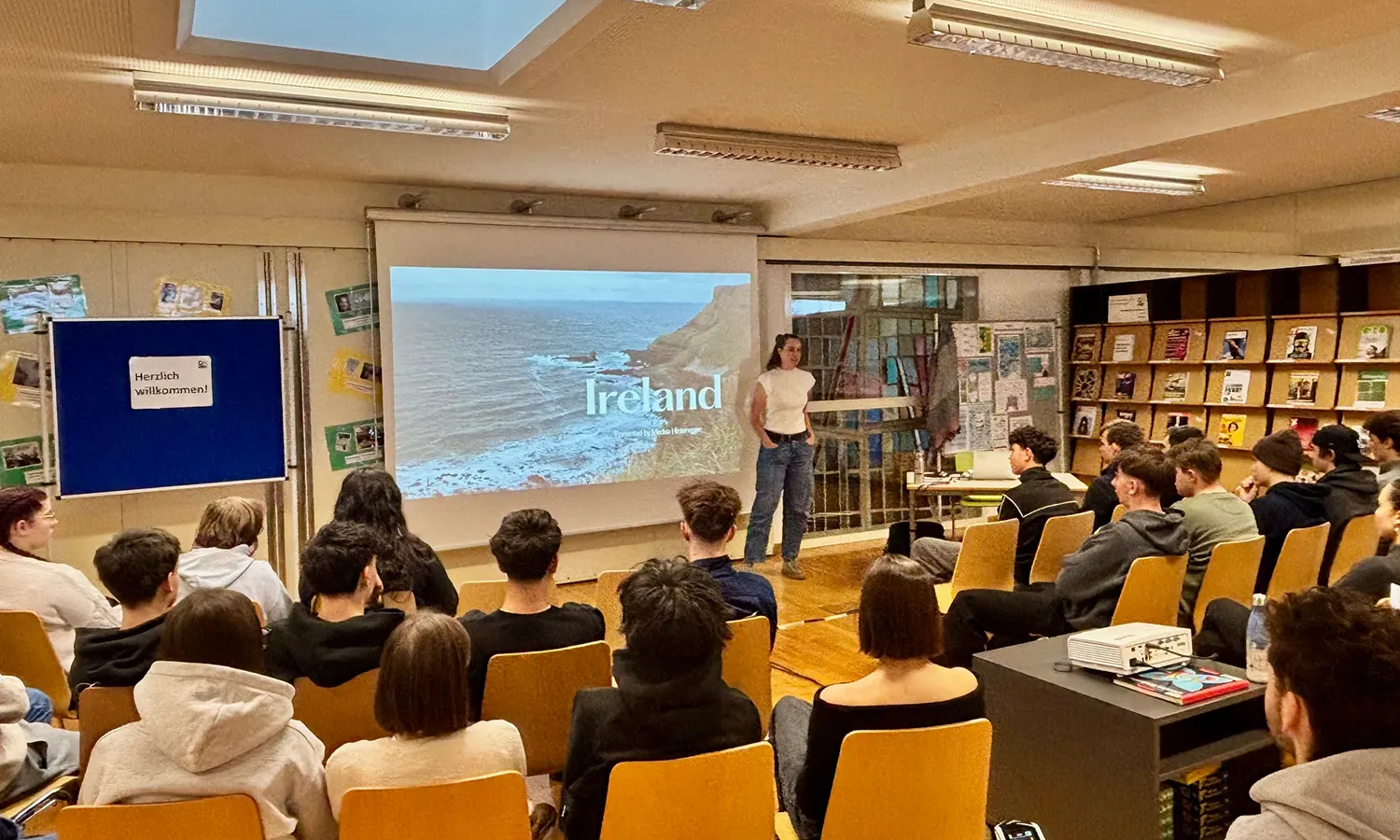
Foto: WFO Bruneck